Twelve months ago, Universal Quantum's Mark Webber spoke to us about the Open Quantum Institute (OQI) – the CERN- and GESDA-backed initiative applying quantum simulation to endometriosis, a chronic condition affecting roughly 10% of women worldwide. We caught up with Webber again to find out what's changed since, and to talk through where the field stands on the road to fault-tolerant, error-corrected quantum computing.
Bridging the gap between physical qubits and real-world applications
Mark Webber: As we continue our work on OQI, we've been working with industry players who aren't necessarily quantum experts to understand where their bottlenecks are today and where things can change, and mapping that to the quantum algorithms we expect to provide an advantage, mostly in the fault-tolerant regime. The qubit resources required to run these applications are quite large relative to current hardware.
Hardware players have on the order of hundreds of qubits, but to run these algorithms in a way that provides an advantage, we need the fault-tolerant, error-corrected regime, where the qubit quality required is unlikely to be reached by the underlying physical hardware that's why we need error correction, which, in short, uses many physical qubits working together to represent what we call a logical qubit. A logical qubit isn't necessarily perfect, but it has much superior error characteristics compared to the underlying physical qubits. It comes with a big overhead, though: you need many physical qubits to represent one logical qubit, and there's also the efficiency of logical operations, because now you want to run operations on the logical qubits rather than the physical ones, which introduces a big overhead too. So to run the applications we're excited about in drug discovery, we're still talking hundreds of thousands, or maybe millions, of qubits – orders of magnitude more than what anyone has today.
That ties in nicely with the Universal Quantum story in general, where we've always focused on the scaling challenge: how do we build these machines with hundreds of thousands or millions of qubits as quickly and cheaply as possible? That's a very different design challenge from getting the highest-quality 100-qubit machine; you optimise for very different things between those two cases.
Moving beyond single-chip hardware limitations
MW: Internally, we have very ambitious projects to move to next-generation hardware, where our research aims are to validate the underlying scaling criteria that correspond to our design-modular chip manufacturing and to determine how we connect these modules. That's a unique feature of Universal Quantum, and we're moving towards further demonstrations of it using different techniques.
For trapped ions, the more commonly considered approach across the industry is a photonic interconnect. Modularity is key for scaling because it's much more feasible to make one high-quality module with hundreds to thousands of qubits than to fabricate a single million-qubit chip directly; device yield and other factors make that infeasible.
So we need modularity, and if you have modules, you need a way to connect them, where the fidelity and rate of those connections are very important. The more commonly considered approach for trapped ions is the photonic interconnect. Each module sits in its own vacuum system, and at the large-scale, million-qubit regime you'd suddenly have a thousand of these modules, each in its own vacuum system, connected together with photonic interconnects – think of it like a fibre optic cable.
The challenge is that the quality and rate of photonic interconnects demonstrated by industry and research groups are orders of magnitude worse than what those same groups can achieve within a single module performing local ion-ion-mediated entanglement. We see photonic interconnects as a major scaling challenge and an application performance challenge, so we've gone in a different direction.
For us, the large-scale machine operates within a single vacuum system, and our individual modules are physically aligned, so connectivity between modules is enabled by the same technology that enables ion connectivity within a single module. Ions are exciting in general, compared to superconducting systems, because of their high-fidelity, long-range connectivity, achieved through shuttling, in which we physically move qubits around the device. For us, the scaling story and modularity come from precisely aligning modules within the same vacuum system: we can physically shuttle an ion from one module to another with the same fidelity and rate as moving it within a module.
Internally, there's a lot of exciting progress here, as we move beyond existing demonstrations between two modules, which are very promising, towards scaling with a tiled array of many modules, along with the technology and manufacturability behind it.
What are the benefits or limitations of trapped-ion shuttling as opposed to the photonic interconnect?
MW: We see shuttling, in isolation, as a huge advantage for modularity and for how we connect modules. Ion shuttling provides very high-fidelity, high-rate connectivity relative to our other operations, and isn't available on many other hardware platforms; superconducting systems, for example, are famous for only nearest-neighbour connectivity. Whether you're running a NISQ algorithm or trying to do quantum error correction more efficiently, we focus on high-fidelity, long-range connectivity, which is a huge advantage over the more commonly considered error-correction protocols.
The best-studied one is the surface code, which relies on the assumption that you have only nearest-neighbour connectivity. By broadening that horizon and exploring the possible error-correction codes we can invent, given our high-fidelity, long-range connectivity, we can select codes with much more favourable ratios of physical qubits needed to reach a target logical error rate – a big advantage.
In the photonic interconnect picture, not all connectivity is enabled via photonic interconnect within a module; it generally assumes some physical shuttling to enable that connectivity. It's only between modules that the photonic interconnect enters the story, but the scaling concerns there are rather dire. There are a few points – today's highest-quality demonstrations rely on relatively large lenses that capture photons from the ion and send them through the cable, and these lenses are large relative to the module beneath them, which limits how many photonic interconnects can come out of one module. This, in turn, limits data bandwidth. If you have a thousand ions in one module but can only fit a small handful of these photonic interconnects, your data bandwidth is very limited.
They are investigating alternatives, such as integrated optics, but it's a research challenge that's arguably still unsolved today. The other challenge: imagine a million-qubit device with a thousand 1,000-qubit modules. How do you get all-to-all connectivity between those modules? You can't connect every module to every other module with a single cable; that's a combinatorial problem that doesn't work. So the suggestion is to route these photonic interconnects into a quantum switch, similar to telecoms, with high N x N switches that have many cables coming in and out, directing signals. But because this is a quantum signal, a single photon you can't use the same telecoms infrastructure and solutions; you need to design them differently.
The state of the art there, in terms of achievable N x N and loss within the switch, is a major research challenge; you occasionally lose photons, which adds another significant error component to the overall budget. Some of these same challenges around high N x N switches also apply to players like PsiQuantum, which is going the pure-photonics route and faces a similar switching-design challenge.
As for using ion shuttling to connect modules, it's true the modules need to be precisely aligned. But through our investigations into what that tolerance actually is, we've identified manufacturable solutions that are well within the required tolerances, so we don't see that as a concerning challenge.
Do you need different algorithms for NISQ versus fault-tolerant, error-corrected systems?
MW: The types of algorithms differ significantly between designing for a NISQ machine versus a fault-tolerant one. For NISQ, you're working in a very focused way to design low-depth circuits; the depth needs to be very short because you're working with a very tight error budget. In chemistry, variational quantum eigensolvers are a well-known NISQ approach. For a fault-tolerant algorithm, depth is still important, but it's not a constraining factor in the same way for quantum chemistry; phase estimation and qubitisation run at very high depth, perhaps hundreds of millions of gates, achievable because error correction lets you reach the needed logical error rates. The algorithms work in a very different way.
That's not to say there's no value in NISQ proof-of-principle demonstrations, but it's similar to machine learning, where it's hard to know in advance that a given approach will solve your problem; it's more a matter of trying it and seeing what happens. NISQ is generally more like that, which means we're limited by the hardware available and are waiting for next-generation hardware with lower error rates and more qubits to test what application performance we'll actually get.
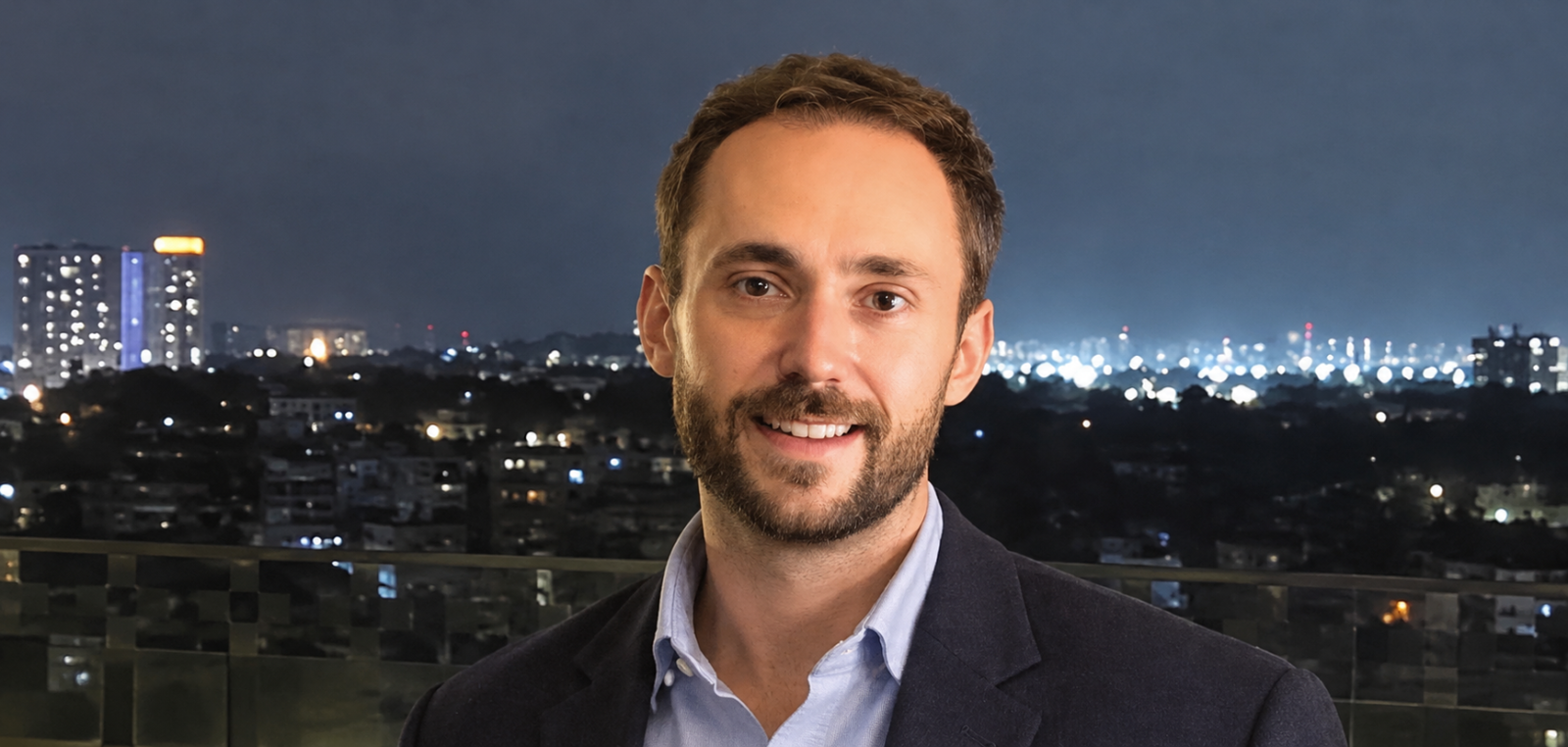
Mark Webber is the Head of Algorithms at Universal Quantum.