Direct liquid cooling (DLC) enables AI hardware to sustain full utilisation, but only as long as the coolant remains within spec. In a technology cooling system (TCS), that coolant circulates through micro-channel cold plates mounted directly on high-value processors. Operators routinely monitor flow, temperature and pressure, yet key coolant heath indicators such as glycol concentration often go unmeasured between lab samples. As a result, gradual changes in coolant chemistry can progress undetected until they affect thermal performance. This is why continuous coolant health monitoring is moving from a nice-to-have to a core requirement for protecting your compute.
What a snapshot can’t show you
Glycol-based coolant is historically treated as a "set it and forget it" fluid: the loop is filled, chemistry is verified at commissioning and the system is left to run. AI data centre environments do not support that approach. Racks and servers are routinely swapped, serviced and recommissioned. Each intervention introduces a new opportunity for contamination or glycol dilution within the TCS. Material substitutions during rushed commissioning, sustained high operating temperatures, gradual fluid loss and weak maintenance programs further compound the risk.
Coolant health is, in fact, a significant issue. Ecolab's global analytical laboratories analysed PG25 samples collected from multiple customers and cooling loops in data centres around the world. Of the 3,000+ samples tested, 32% had at least one parameter out of specification based on OCP and ASHRAE standards.
When coolant chemistry falls out of spec, it affects the most critical components of the system. Corrosion byproducts, scale and biofilm may accumulate and foul micro-channel cold plates. This can restrict flow through the narrow passages responsible for removing heat from processors. Reduced flow directly lowers heat transfer, increasing the risk of thermal throttling, damage to processors and unplanned downtime.
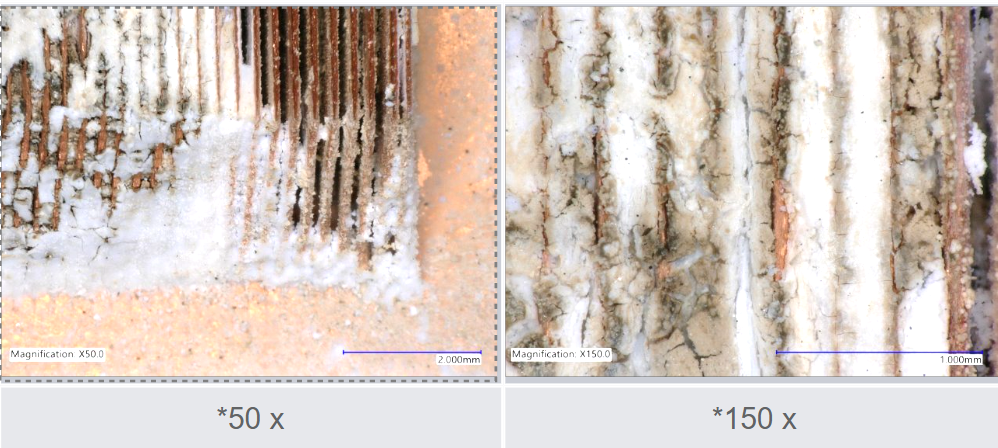
Fouling and contaminants within cold plate micro-channels restrict flow and reduce heat transfer (Credit: CoolIT)
These conditions frequently develop undetected. Periodic lab sampling captures coolant health at a single point in time, leaving gaps in which degradation can progress without visibility. At one operator, glycol concentration declined gradually from 24.5% to 22% over two months. This duration can easily fall between routine samples taken quarterly. The loop also contained PVC components due to a material substitution made during a rushed commissioning process. During the glycol level decline, pH and conductivity readings remained within normal ranges. The degradation went undetected by standard measurements until corrosion had progressed to the point that the system had to be taken offline.
Spot coolant issues early. Act before they affect performance
Continuous coolant health monitoring helps close the gaps left by periodic sampling. Key parameters are measured in real time, giving operators ongoing visibility into the condition of the coolant circulating through the TCS. Deviations are identified as they occur rather than weeks later in a lab report. Operators can intervene before coolant degradation affects thermal performance, shifting maintenance from a reactive model to a proactive one.
Continuous data also establishes a baseline for trend analysis. Gradual shifts that fall within normal ranges at any single point in time become apparent when tracked over days and weeks. Trending makes it possible to detect early-stage corrosion, contamination and chemistry drift that a single lab sample might not reveal.
The value of this visibility is demonstrated in the field. At one site, continuous monitoring detected a 10-psi rise in differential pressure across the TCS. The increase was traced to corrosive particulate that the customer's side-stream filtration had failed to capture. The early warning allowed the condition to be addressed before particulate accumulation could restrict flow through the cold plates.
Insight straight from the inside with Ecolab’s 3D TRASAR™ technology and CoolIT CHx™ 3000
The CoolIT CHx™ 3000 is Ecolab's highest-capacity coolant distribution unit (CDU), delivering 3 MW of cooling. 3D TRASAR™ Technology is integrated directly into the unit. Every megawatt of cooling is backed by real-time insight into the fluid that delivers it.
In addition to the CDU's dynamic control system, the built-in 3D TRASAR Technology continuously measures glycol concentration, pH, turbidity, conductivity and contaminants (differential pressure). Glycol concentration is the leading indicator of the system's protection against microbial growth. When dilution or fluid loss lowers concentration, bacteria can form biofilm that fouls cold plates and restricts flow. Measuring glycol directly contributes to the system staying protected.
Integration also closes a common gap during deployment. On new construction, bringing loops online takes priority and standalone monitoring is often treated as an add-on. Ecolab installation teams have seen TCS loops running before the monitoring unit had power, leaving coolant unmonitored during commissioning. With 3D TRASAR built in, monitoring begins the moment the CDU starts up, with no separate installation required.
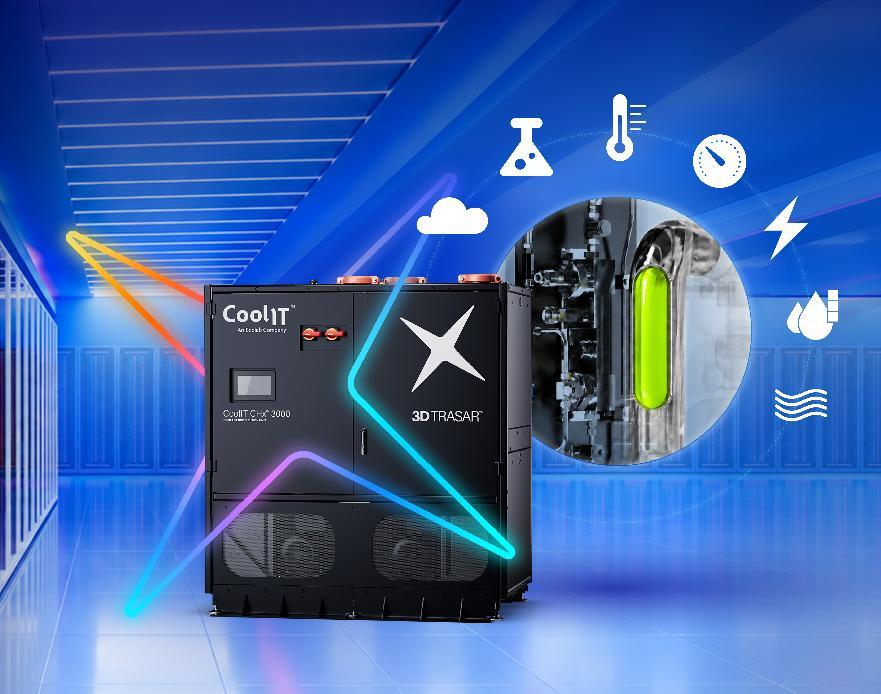
CoolIT CHx™ 3000 CDU with integrated 3D TRASAR™ Technology (Credit: CoolIT)
Coolant health data feeds directly into the facility's building management system (BMS), giving operators a single view of coolant conditions alongside other critical infrastructure. Behind the technology are more than 40 years of Ecolab experience in closed-loop systems and nine global laboratories analysing more than 400,000 samples each year. Combined with CoolIT's proven direct liquid cooling know-how, the CHx 3000 gives operators one integrated system and one accountable partner for both cooling performance and coolant health.
Shift from reactive to proactive
As AI workloads push rack densities higher, coolant has become as critical to uptime as the hardware it protects. Yet it is still commonly managed through periodic sampling, which is quickly becoming a less effective approach. When nearly one-third of samples from the field show at least one parameter out of specification, and degradation can progress while standard indicators appear normal, a single point-in-time measurement is not sufficient protection.
Continuous monitoring enables change to be detected as it occurs, helping to expose trends before they become failures and lets operators act before cold-plate performance is compromised. It is most effective when built into the cooling infrastructure from startup, rather than added after the fact.
The question is no longer whether coolant conditions will change, but whether operators will know when they do. Protecting your compute starts at the coolant, and protecting the coolant starts with continuous visibility.