On-Demand | AI-HPC Convergence: fixing the data, power and compute gaps
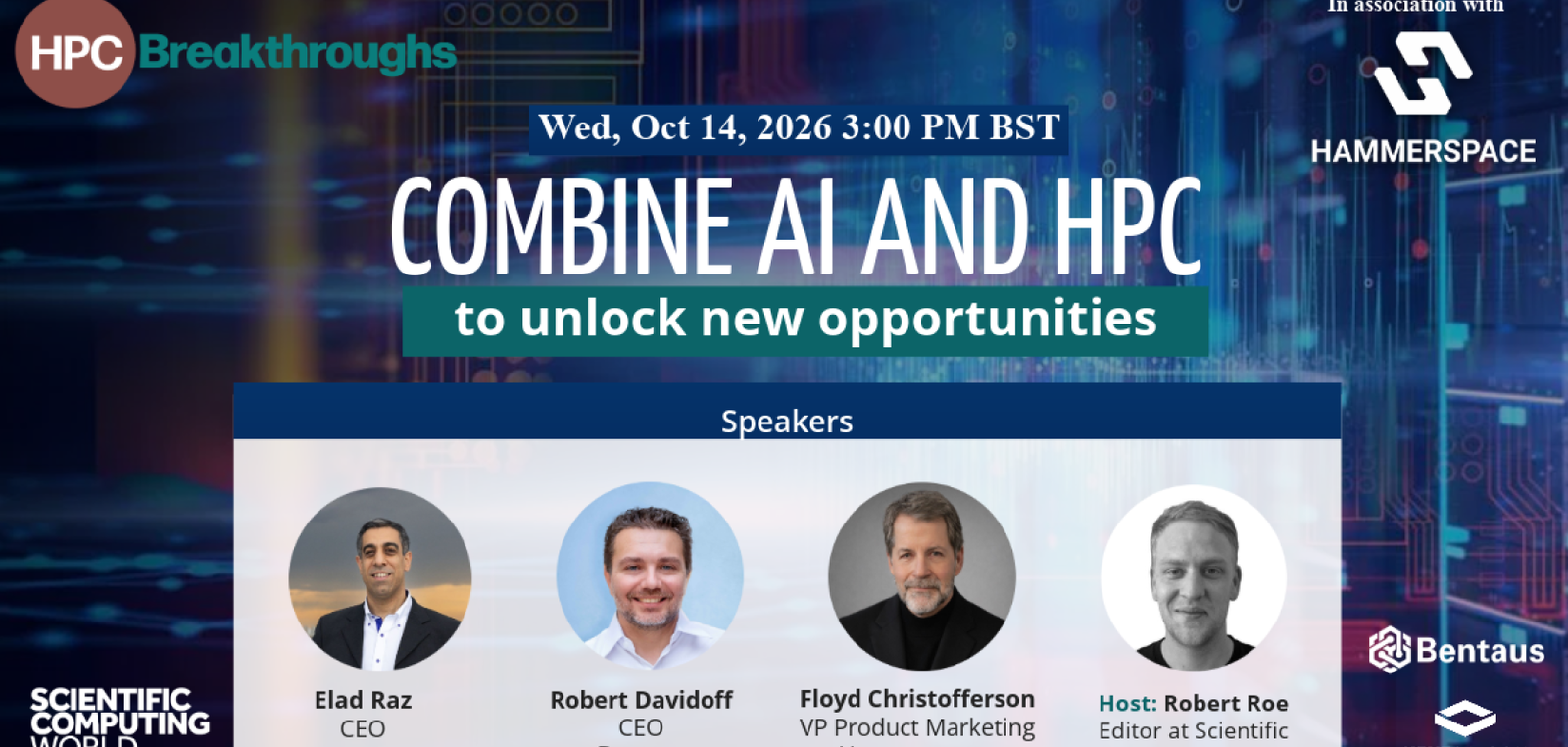
Webcast supported by
Starting at 3pm BST (10am EST)
In this hour-long panel discussion, we’ll discover how AI and HPC capabilities can be combined to unlock new research opportunities.
The convergence of AI workloads and physics simulation-focused HPC is the next frontier for scientific research organisations.
Scientific research organisations are asking their HPC resources to do something new: run AI training and inference alongside traditional simulation, on the same data, often within the same power envelope. The result is friction in places many teams didn't expect.
Data sits in silos across cloud, edge and on-premise systems, so GPUs wait on information that exists but cannot be reached. Power and cooling limits put a cap on how far clusters can scale. And CPU- and GPU-centric architectures are being pushed hard by workloads they weren't designed to mix.
In this panel, experts in data orchestration, grid-aware energy management and next-generation compute architecture discuss where hybrid AI-HPC environments are breaking down, what the practical fixes look like and where research organisations should invest first.
Expect a candid discussion of the trade-offs, plus a live Q&A, moderated by Scientific Computing World editor, Robert Roe.
Who should attend?
- IT and infrastructure leaders planning or running hybrid AI-HPC environments
- Data scientists responsible for model accuracy, reproducibility and governance
- Hands-on scientists who want their data platform to stop being the bottleneck in discovery work
- Researchers and academics deciding the next step in their data and compute strategy
What will you learn?
- How to tell whether your storage and data layer can keep GPUs busy, and where the gaps usually sit
- What a realistic hybrid architecture looks like when AI and simulation workloads share infrastructure
- How power availability and grid constraints are shaping where, and how fast, you can scale
- Where next-generation compute architectures fit alongside today's CPUs and GPUs
- Where connectivity gaps drive up project costs, and how to close them
Speakers

Moderated by Robert Roe, Editor of Scientific Computing World
Robert has been a journalist covering scientific computing for 15 years. He specialises in covering high-performance computing (HPC), laboratory informatics, computer-aided modeling and AI applications in scientific research. He spearheads SCW’s major publication initiatives, including the annual SCW75, which honours influential leaders shaping research computing infrastructure. He will moderate the discussion and take questions from attendees at the end.
|  |

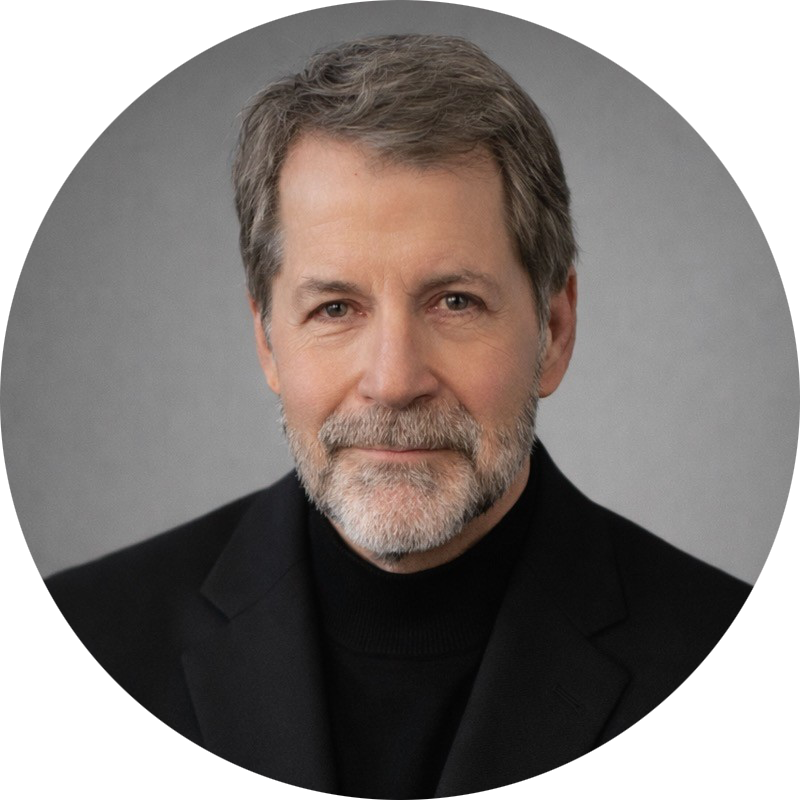
Floyd Christofferson, VP Product Marketing at Hammerspace
Floyd has spent more than 25 years working on large-scale data infrastructure across HPC, life sciences, research and enterprise AI, including a decade at SGI on some of the world's largest HPC storage environments. At Hammerspace he focuses on AI infrastructure and hybrid cloud data orchestration. He brings the data layer view: how to unify access across sites, clouds and storage types without forced migrations.
|  |

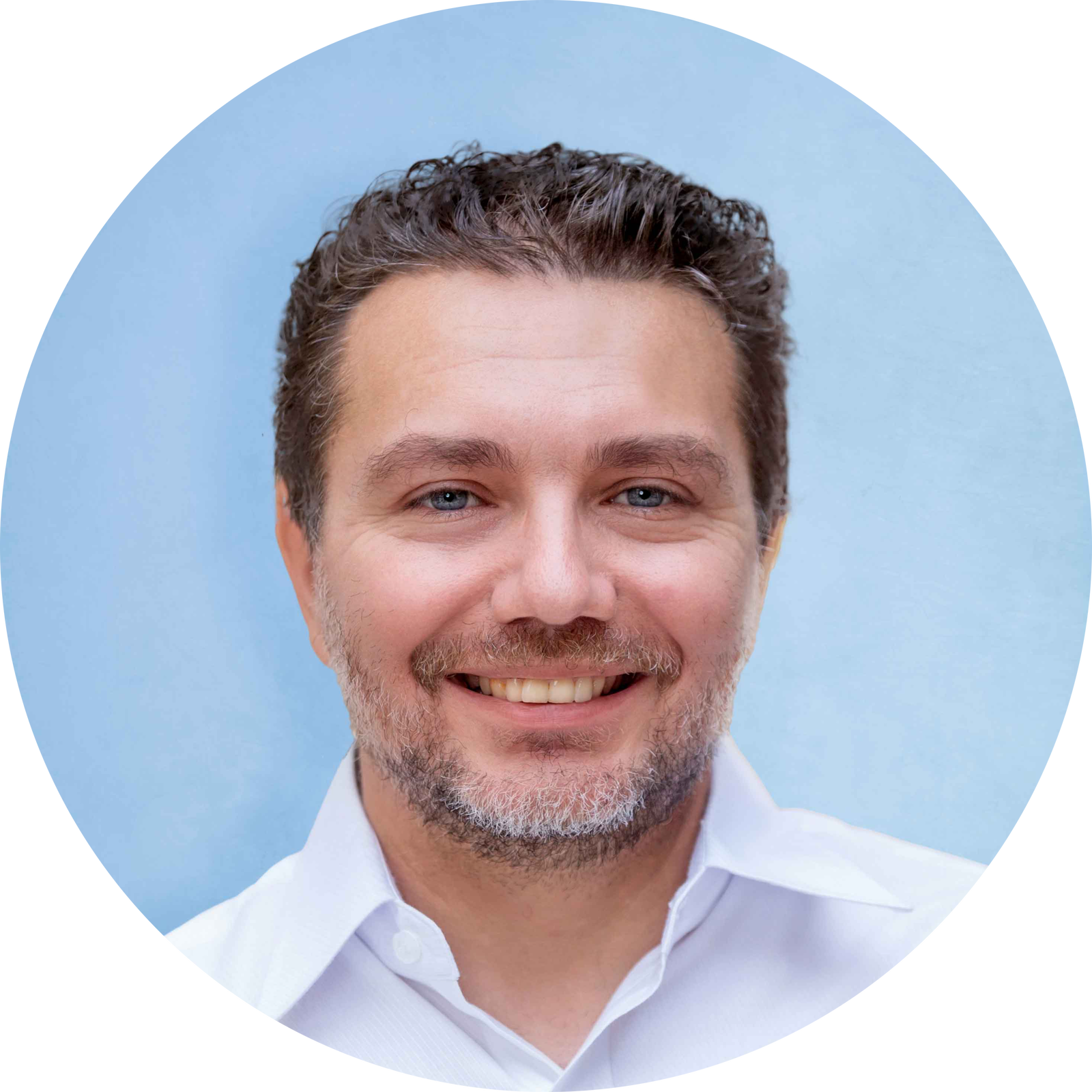
Robert Davidoff, CEO of Bentaus
Robert has more than 30 years of experience across data centre architecture, HPC and energy systems. Bentaus develops energy orchestration software that lets data centres operate as flexible, grid-responsive loads and virtual power plants. He brings the power view: what grid and energy constraints mean for scaling AI and HPC.
|  |
Elad Raz, CEO of NextSilicon
Elad is a graduate of Unit 8200 and has spent more than 20 years building deep-tech companies across software, silicon and infrastructure. He previously founded Integrity Project, acquired by Mellanox Technologies in 2014, and now leads NextSilicon's work on a new compute architecture for the AI and HPC era. He brings the compute view: what comes after the limits of traditional CPUs and GPUs.
|  |