The right liquid cooling architecture for AI data centres is not a simple binary choice between single-phase and two-phase technology. It is a strategic decision built on three core criteria: application, system architecture, and long-term scale. Get those elements right, and a facility can support today's high-density hardware while preserving room for the generations that follow.
Data centres need cooling architectures that support current deployments while retaining headroom for the systems coming next. As rack densities rise and processor power climbs, the right liquid cooling decision depends on far more than a preference for single-phase or two-phase technology. It depends on the application, the system architecture, and the ability to scale across multiple generations of compute. It is also shaped by what the IT equipment ships with: NVIDIA's GB200 platform, for example, arrives with single-phase coldplates already integrated out of the box.
That broader view matters because artificial intelligence is changing the pace of data centre planning. Operators design facilities around hardware roadmaps that keep moving rapidly. Chips that once seemed aggressive at 1kW are giving way to devices that push several times that thermal load. Servers operating at 10kW to 15kW are entering real design conversations, and future racks will place even greater demands on mechanical, thermal, and facility infrastructure.
For data centre owners, the practical question is simple: which liquid cooling architecture gives the facility the greatest confidence over time?
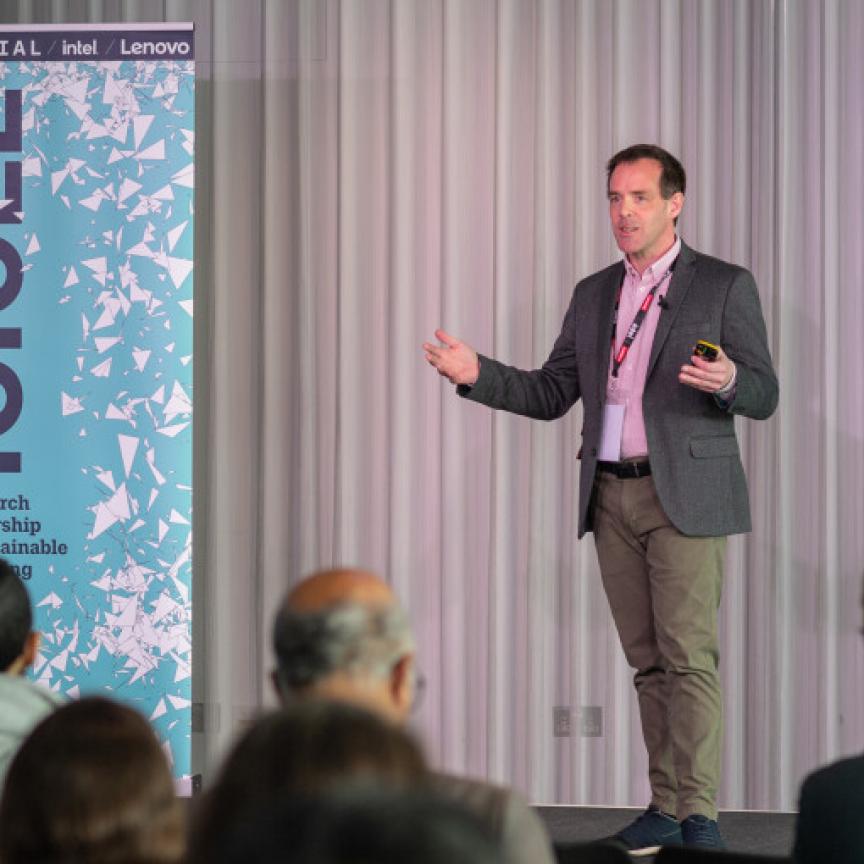
Kamal Mostafavi, Chief Technology Officer at CoolIT Systems, frames that decision around three distinct criteria: application, system, and scale. "The single-phase versus two-phase debate is too narrow on its own," says Mostafavi. "The real question is how the complete infrastructure supports the workload, the server architecture, the operator's long-term scaling plan, and the coldplates and components that ship with the IT equipment."
Start with the application
Every liquid cooling decision begins with the workload.
Edge computing, modular data centres, telecommunications environments, AI training clusters, and high-density hyperscale facilities each place fundamentally different demands on the cooling system. Each application carries its own facility limits, thermal targets, service expectations, and business metrics. While some operators still prioritise power usage effectiveness (PUE), many AI infrastructure teams now evaluate efficiency in terms of tokens per dollar per watt and the total computational performance a cooling architecture can help unlock.
That changes how technical teams evaluate cooling technology.
A facility supporting dense AI compute needs a very different approach from one supporting lower-density enterprise workloads. Operators must weigh how much heat the application creates, how much cooling the facility can deliver, and how each architecture shapes the business metric that matters most.
The strongest cooling decision stems from that full context. It connects workload dynamics, performance output, energy usage, and facility readiness into a single cohesive view.
Look at the full system, not just the chip
Liquid cooling conversations often start at the component level. CPUs and GPUs receive the lion's share of attention because they carry the highest thermal loads. While that view gives operators a useful starting point, high-density AI systems now demand a broader system-level lens.
The next critical question is how much of the server actually needs liquid cooling.
Some deployments cool only the main processors. Others incorporate memory, storage, power conversion components, networking devices, or pluggable connectors into the thermal loop. As more components enter the loop, the cooling architecture evolves: the coolant path changes, the manifold configuration shifts, the rack design adapts, and the facility interface changes with it.
That is why system architecture matters so profoundly.
Many data centres deploying liquid cooling today operate in hybrid environments where air cooling and liquid cooling work side by side in the same room. Computer room air handlers (CRAHs), coolant distribution units (CDUs), and facility loops all coordinate to maintain thermal performance. As operators move towards higher liquid heat capture rates, they ease the thermal burden on air-cooling infrastructure and build a robust path towards efficient high-density compute.
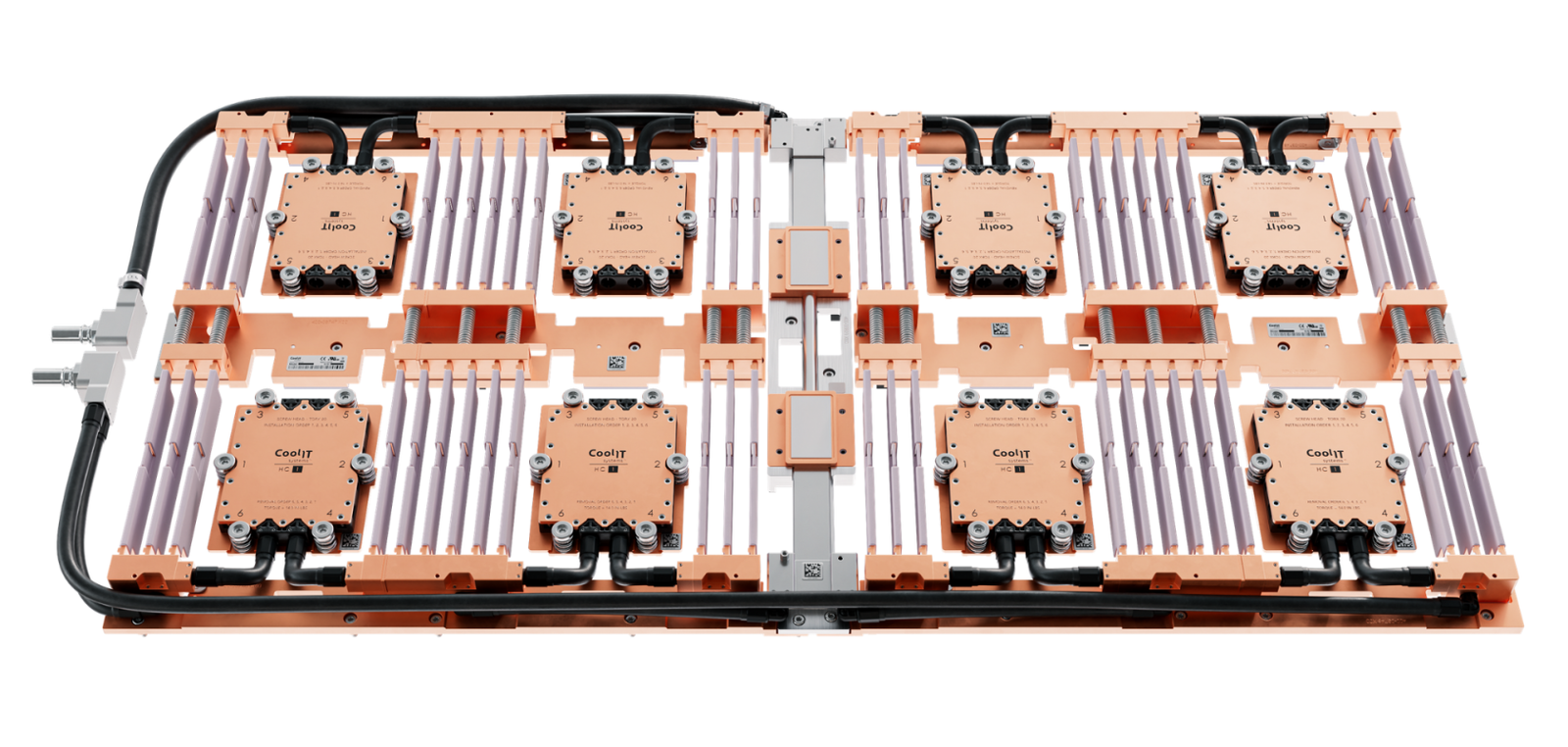
The supplier decision also grows increasingly important at the system level. Advanced liquid cooling requires far more than an isolated coldplate. It requires coldplates, internal loops, manifolds, CDUs, software controls, commissioning protocols, and deep operational knowledge working seamlessly together. CoolIT's comprehensive direct liquid cooling (DLC) portfolio and system-level engineering expertise support this broad range of data centre deployment scenarios.
Plan for scale across hardware generations
Data centre infrastructure needs to serve more than a single generation of IT hardware.
That makes scalability one of the most critical criteria in any liquid cooling architecture decision. An operator may deploy one generation of AI racks today, then integrate significantly denser systems over the next several years. The cooling architecture must support that progression without forcing a major, disruptive facility redesign every single time the silicon roadmap advances.
That is where single-phase direct liquid cooling has become especially compelling for large-scale AI infrastructure.
"Single-phase liquid cooling has a longer runway than many in the industry once assumed," says Mostafavi. "The opportunity now is to design infrastructure that can follow that roadmap sustainably."
Single-phase DLC gives operators a mature, highly practical, and scalable architecture for high-volume deployment. It utilises standard water-glycol coolants, integrates smoothly into established facility engineering practices, and supports a vast range of system designs. It also provides the industry with a proven foundation for continuous innovation as chip power envelopes, rack densities, and heat capture requirements keep climbing.
CoolIT's recent demonstration of a 15kW single-phase coldplate reinforces that message. The design extends the single-phase DLC roadmap across multiple generations of high-performance AI infrastructure, proving that single-phase direct liquid cooling can scale to meet future ultra-high-density GPU and AI accelerator demands.
For operators, that empirical proof point carries immediate practical value. It demonstrates that single-phase liquid cooling still possesses substantial room to run, giving data centre owners, OEMs, ODMs, and silicon providers greater confidence that today's infrastructure investments will support tomorrow's compute workloads.
The better question for AI data centres
The future of data centre cooling will undoubtedly bring continued innovation across single-phase, two-phase, immersion, and hybrid approaches. Even so, the strongest architectural decisions always start with the same fundamental questions:
- What application needs to be cooled?
- What system architecture needs to be supported?
- How far does the supporting infrastructure need to scale?
These questions move the conversation beyond a simplistic technology comparison and towards a structured planning framework. They help operators design for maximum performance, operational efficiency, and long-term capital confidence.
For AI data centres, that confidence is paramount. The hardware roadmap will keep accelerating, rack densities will continue to climb, and cooling systems will need to support more components, higher heat fluxes, and more integrated architectures.
"Cooling can no longer be treated as a downstream accommodation," concludes Mostafavi. "It is now part of the core architecture from the chip to the facility."
Single-phase direct liquid cooling is already proving it can keep pace today, and well into the future.