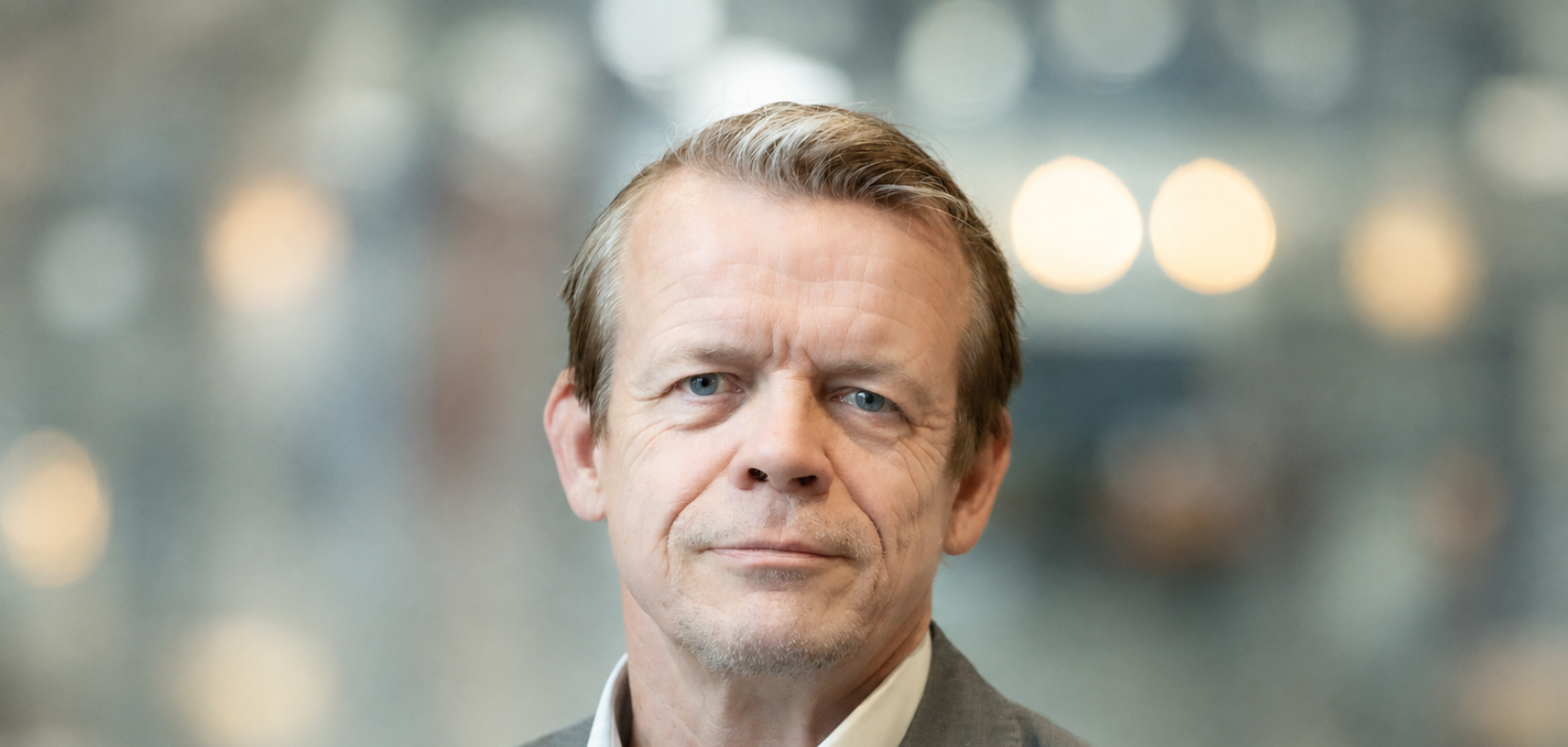
Kimmo Koski has led CSC – IT Center for Science through nearly the entire arc of Finnish supercomputing history, joining in 1989 alongside the country's first Cray X-MP and becoming CEO in 2004.
In this interview, Koski traces CSC's evolution from a niche technical provider serving a handful of specialist users into a 780-strong organisation with a national mandate spanning HPC, AI, quantum computing, research networking, and university digitalisation.
He discusses the lessons learned and how they still shape procurement strategy today, the design philosophy behind Finland's new national system, Roihu, and its relationship to the EuroHPC-funded LUMI, and the government's landmark €250m commitment to LUMI-AI, five times its original LUMI investment, as the country positions itself at the centre of Europe's AI computing ambitions.
Can you tell me about your role at CSC?
Kimmo Koski: I have been the CEO for 22 years now, since 2004. However, my history with CSC started back in 1989, when the first Finnish supercomputer, a Cray X-MP with four processors, 256 megabytes of memory, and a price tag of 40 million Finnish marks, was acquired. That system arrived in 1989, and I joined alongside it, not in the same box, of course, but to maintain one of the front-end machines.
Throughout the 1990s, I worked at CSC in various roles: purchasing supercomputers, running the technical group, and so forth. I then spent one year at CERN and a bit more than four years at Nokia before returning as CEO in 2004.
It is quite an interesting story. In 1989, we had about 35 people. I remember when I left for Nokia in 2000, we were around 80. The famous words of the previous CEO were always that CSC would never grow beyond 100 people. Today, we have 780 staff members. The main reason for this growth is that in Finland, everything is centralised under one roof. While you are interested in HPC, AI, and quantum computing, we also run the national research network, handle the digitalisation of universities, and manage extensive data services, not only for research, but also for culture, such as museums, archives, and scientific libraries, as well as data for education. It is a very wide mandate in Finland at the moment, probably wider than anywhere else.
How has the role of CSC changed over the years?
KK: The role has developed significantly over the years. In the early 1990s, we were practically running the national research network, Finnish University and Research Network (Funet), alongside supercomputing services for a relatively limited number of users and a narrower scope. Eventually, more data services emerged, first for research data, and later through library collaboration. AI came along more recently, and the newest addition has been the digitalisation of universities.
To give you an idea of our structure today, out of our 780 employees, roughly 200-plus work in scientific computing, 200-plus in data, and about 100 in digitalisation, alongside our international collaboration teams.
Another interesting dynamic: when I returned to CSC as CEO in 2004, we were involved in just two EU projects. Our roles were quite minor, mostly communications or secondary tasks outside our core business. The board, since we are a non-profit limited company with a board like any corporation, gave me the task of making CSC more international. Today, we have more than 70 EU projects underway, with LUMI among the largest. The organisation has evolved continuously, sometimes by targeted strategy and sometimes almost by accident.
What shifts have you seen in the computational demands of the user community?
KK: Looking back over a 20-year time frame, or even going back to when the Cray X-MP arrived, that machine was a vector processor. At the time, only a specific set of applications could use it. The way CSC operated back then was also quite different: we were technocrats, and a customer was almost seen as a disturbance to technical work.
One of the main cultural shifts we have driven, and a key reason why we have grown, is prioritising customer satisfaction. Even though many of our staff have technical backgrounds, we focus on customer needs rather than our own technical preferences.
The second major shift is recognising our core identity: CSC does not conduct its own research; we support other people's research. About 15% to 17% of our staff hold doctorates, including myself. Our task is strictly to support external research. Thirty years ago, that distinction was not as clearly understood as it is today. Staff can conduct research if they take leave to attend a university and return later, but our primary mission remains support.
In terms of hardware and workload areas: we moved from vector processing to RISC processors and clusters. In the mid-to-late 1990s, we faced justified criticism for providing only certain types of high-end resources. We shifted our approach to offer a broader spectrum of resources, combining high-end machines with medium-range clusters.
At that time, systems were entirely CPU-based. Recently, GPUs and AI computing have entered the picture in a big way. When we competed for EuroHPC and established the LUMI collaboration, performance benchmarking was conducted a few years before its 2022 deployment. We had to ask ourselves whether we could build such a GPU-dominant system, given that over 95% of LUMI's compute cycles come from GPUs, and less than 5% from CPUs. Even that 5% is still considerable given the system's massive scale.
It turned out to be the right decision. Today, workloads have converted heavily toward GPUs, though CPUs still retain a role. Quantum computing remains an unknown for the future. I do not believe there is a proven quantum advantage anywhere yet, but many are investing effort into it. As you might have noticed, in the second week of July, we announced the €40m IQM deal linked to EuroHPC.
While things are moving strongly toward AI, we must remember that it is not only about AI. Amid the AI hype, people sometimes forget that traditional computing persists. However, GPU- and AI-type workloads can now be applied across far more disciplines than was possible a few years ago.
Has the introduction of AI changed how the user community wants to consume these resources?
KK: The difference is very clear, and it actually predates the current AI boom. In the 1990s, when vector processors were dominated by climate scientists running heavy models, bioinformaticians were beginning to emerge. Bioinformaticians did not need massive vector operations; they wanted a large number of smaller processors to run vast amounts of simultaneous calculations.
The same applied to certain subfields of physics: they needed high volumes of small jobs. In the mid-to-late 1990s, we illustrated this using a resource pyramid. Extreme-scale, high-end computing was necessary at the peak, but many disciplines required middle-tier cluster computing instead.
Historically, physicists, fluid dynamics researchers, and meteorologists were traditional CPU users. Bioinformaticians, economists, and others adopted alternative, less traditional methods earlier on. Looking at LUMI's current usage, about 50% of the system is dedicated to AI-type workloads, while the remaining 50% is used for other GPU-accelerated computing.
Furthermore, younger generations graduating today have not necessarily lived in the world of command-line text editors like Vi or Emacs. They enter with entirely different toolsets. We are seeing a major user transformation driven not just by academic discipline but also by generational shifts.
What lessons did you take from LUMI that shaped the design of your next national supercomputer, Roihu?
KK: LUMI is a European system, formally owned by EuroHPC and hosted by our consortium. However, we maintain our national tier because it serves a different function: it is under our direct control and can therefore be tailored to national priorities.
Roihu was not designed directly as a derivative of LUMI, but rather to complement it. Because Finland owns a quarter of LUMI's capacity, in addition to what our researchers can apply for via the general EU quota, we designed Roihu to be more CPU-oriented and less GPU-heavy. Roihu went through an open European procurement process, which was won by Bull (Atos) using Nvidia and AMD components, whereas LUMI was built by HPE using AMD GPUs and CPUs.
The biggest single historical lesson came from that first Cray X-MP purchase. It was a massive investment at the time and we bought the entire system upfront on day one. By year three, technology had advanced so much that cheaper systems were matching its performance in certain applications, prompting criticism. From that experience, we learned two core principles that still guide us today.
The first is phased deployments – we do not acquire a full five-year system all at once. We secure an initial environment to start immediately, followed by a main system or expansion phase roughly two years later. You are effectively purchasing capacity over time.
The second is the ecosystem – we do not rely on a single massive machine to handle every workload. Even within a system like LUMI, there are distinct tiers of memory, storage, CPUs, and GPUs. The goal is to build an interconnected compute ecosystem rather than just run an isolated machine.
Kimmo Koski is the CEO of CSC.