
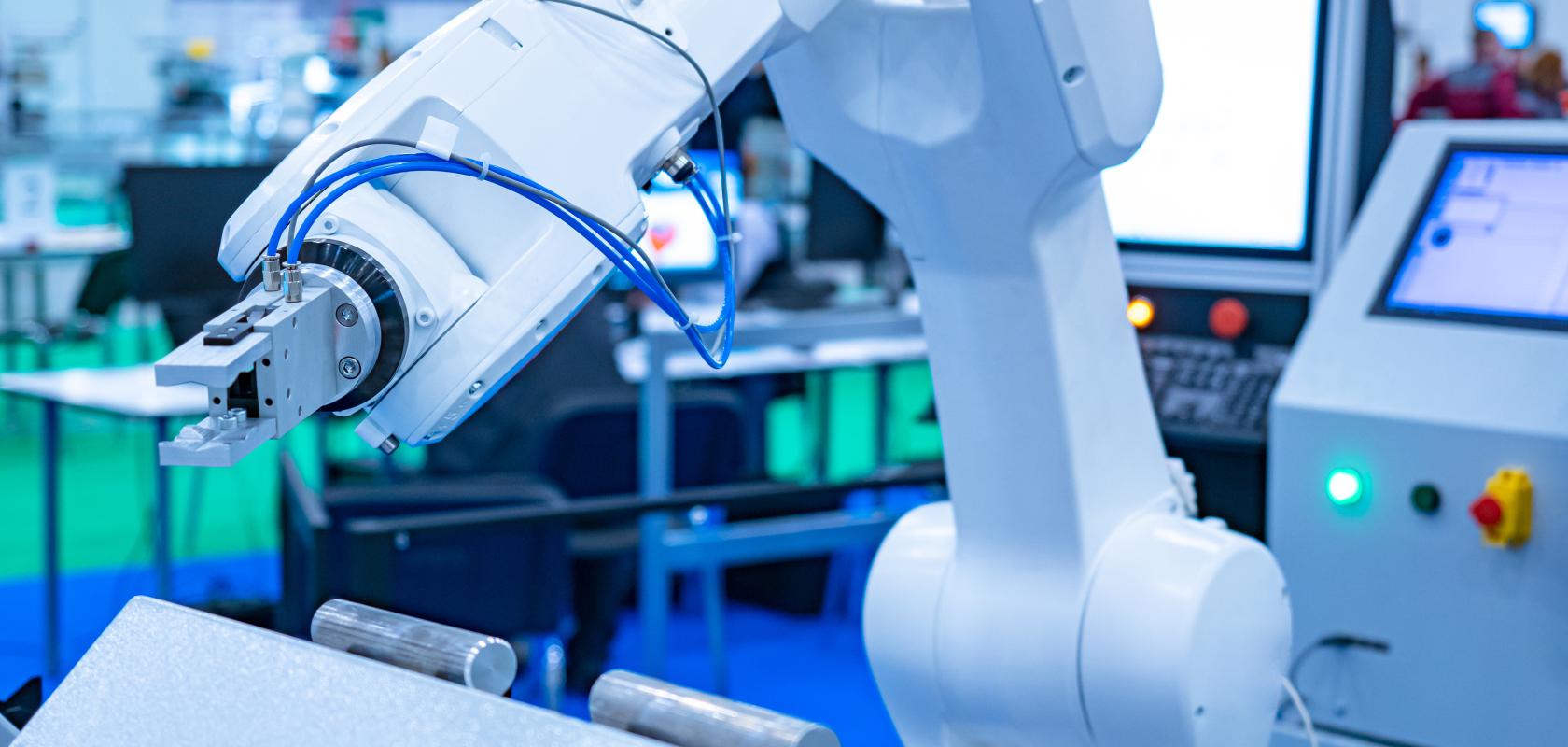
The article discusses the shift from conversational AI chatbots to Agentic AI in laboratory environments and how Agentic AI enables autonomous workflow execution, multi-agent orchestration, compliance, and predictive quality control. It also includes the limitations of standard LLMs in regulated labs and showcases LabVantage CORTEX™ as a next-generation laboratory platform.
The Chatbot Plateau
Over the past two years, the life sciences and laboratory informatics community has increasingly adopted what is often called the ‘chatbot phase’ of AI deployment. Recent advancements in LLMs have provided researchers with capabilities to summarise complex research, assist with literature review, and question answering, and increase the accessibility of scientific knowledge. However, while LLMs have been able to converse fluently, they have also shown limitations in a regulated laboratory environment where traceability, validation, and execution are required.
The next stage of this transformation is the emergence of Agentic AI: goal-oriented agents that can reason, plan, execute, and adapt in real-world laboratory settings.
Limitations of Standard LLM Deployments in Laboratory Settings
Although they do have some positive aspects, standard LLM deployments exhibit several limitations:
- They do not natively initiate or execute workflows without external orchestration. They cannot directly interact with laboratory instruments or dynamically adjust protocols without system integration.
- The fragmented nature of multi-day experiments and lengthy protocols can exceed the context window or persistence capabilities of standalone LLM sessions.
- They lack built-in mechanisms for enforcing compliance, auditability, and validation requirements.
Enter Agentic AI: From insight to execution
Agentic AI represents a shift from passive AI assistance to active workflow orchestration. Unlike chatbots, agents are designed to take a broad, high-level scientific objective and generate executable, structured workflows.
This capability is built on four functional pillars that create an intelligent and operationally effective system, which are listed below:
Data ingestion: Integration with LIMS, ELN, instruments, and streaming data sources.
Planning and task decomposition: Breaking down complex scientific objectives into logical action steps.
Execution via system integration: Performing the necessary tasks by using integrated lab systems.
Monitoring and feedback: Evaluating results and recalibrating the strategy as needed in real time.
The power of multi-agent orchestration
Laboratories are complex ecosystems; processes such as sample management, quality control, stability testing, and regulatory reporting do not follow a linear path.
Agentic AI can address these complexities through multi-agent orchestration. Instead of using a monolithic system to do everything, a multi-agent architecture decomposes functionality into specialized agents that perform specific tasks but work together and communicate via shared state or orchestration layers.
This distributed intelligence reflects how laboratory teams interact with one another, while at the same time providing improved speed, consistency, and scalability, compared to a centralized system.
As Gary Stimson, Principal Architect of AI Technologies, puts it: “We are moving from a world where scientists manage software to a world where AI agents manage the routine, allowing scientists to focus solely on discovery.”
System architecture considerations
A typical agentic laboratory system consists of an orchestration layer coordinating multiple agents, each connected to laboratory systems via APIs. Persistent states are maintained in databases or workflow engines to support multi-step and multi-day experiments. Event-driven triggers (e.g., instrument output, QC thresholds) initiate agent actions, while all decisions and actions are logged for traceability and auditability.
LabVantage CORTEX™: The intelligent lab nervous system
LabVantage CORTEX was officially released in March 2026, putting LabVantage at the forefront of this new reality.
LabVantage CORTEX is not a chatbot overlay onto existing software systems; instead, it's a cloud-native, multi-tenant platform that integrates with the LabVantage LIMS ecosystem and orchestrates modern laboratory workflows.
Its capabilities represent a purpose-built approach to Agentic AI:
Autonomous workflow execution: LabVantage CORTEX Agents can begin and run workflows on their own within LabVantage LIMS by reducing manual intervention in repetitive workflows.
Predictive quality control: LabVantage CORTEX uses a continuous data monitoring process that monitors data drift in data and identifies the potential problem before it can impact batch integrity.
Semantic integrity: LabVantage CORTEX utilises built-in, domain-specific ontologies to correctly interpret the data and provide a consistent structure throughout the system, which reduces inconsistency through structured data interpretation and other inconsistencies often found in generic AI models.
Design compliance: LabVantage CORTEX automatically logs every action in accordance with laboratory SOPs, providing laboratories with a complete audit trail for any 21 CFR Part-11 compliant environment.
Redefining the future of discovery
With the introduction of Agentic AI, labs now have increased expectations for speed, reproducibility, and operational consistency, with decreased manual work and reduced errors. This improves consistency in multi-step laboratory workflows by staying compliant continuously and allowing scientists to invest more time on innovation and discovery activities and less on operational tasks.
LabVantage CORTEX is changing the definition of what a LIMS is. By embedding intelligent, goal-oriented agents at the core of laboratory systems, LabVantage is expanding the role of LIMS from passive data repositories to active workflow participants.
The transition from conversational to operational AI will depend on system integration, validation requirements, and trust in autonomous execution. The key question is where agentic systems can deliver reliable value within existing laboratory workflows.