NIST research project makes it easier for researchers to fabricate silicon photonics chips
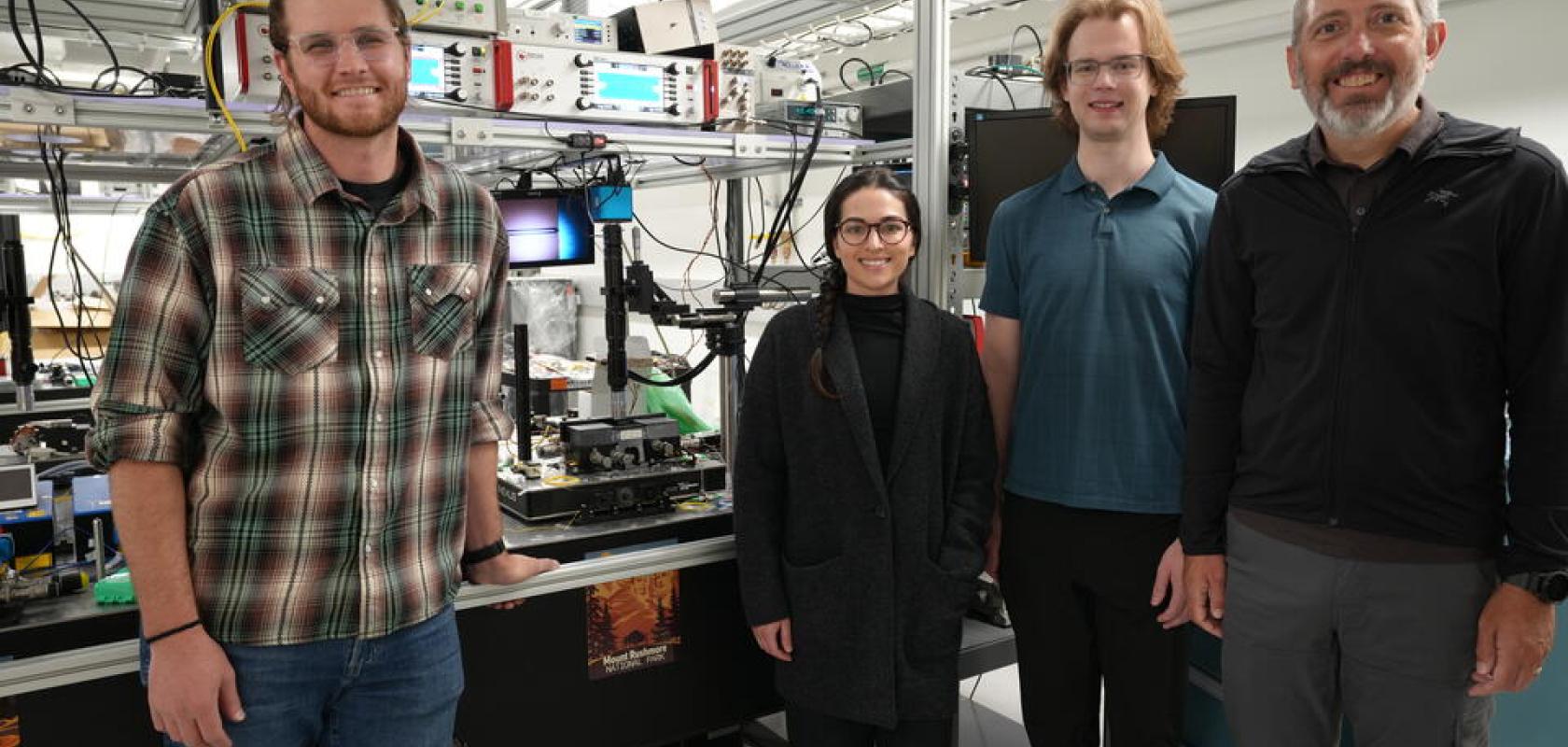
NIST researchers Grant Brodnik, Alexa Carollo, Lindell Williams and Scott Papp, among others, worked to make integrated circuits for light by depositing complex patterns of specialised materials onto silicon wafers.
Credit: R. Jacobson/NIST
NIST’s chips could help emerging technologies such as quantum computers and optical atomic clocks escape the lab and start to impact biomedicine, navigation, communications and other areas.

Register for FREE to keep reading
Join 12,000+ scientists, engineers, and IT professionals driving innovation through informatics, HPC, and simulation with:
- Insights into HPC, AI, lab informatics & data
- Curated content for life sciences, engineering & academia
- Access to Breakthroughs: real-world computing success
- Free reports & panels, including the Lab Informatics Guide
- White Papers & software updates for smarter research
Sign up now
Already a member? Log in here
Your data is protected under our privacy policy.