
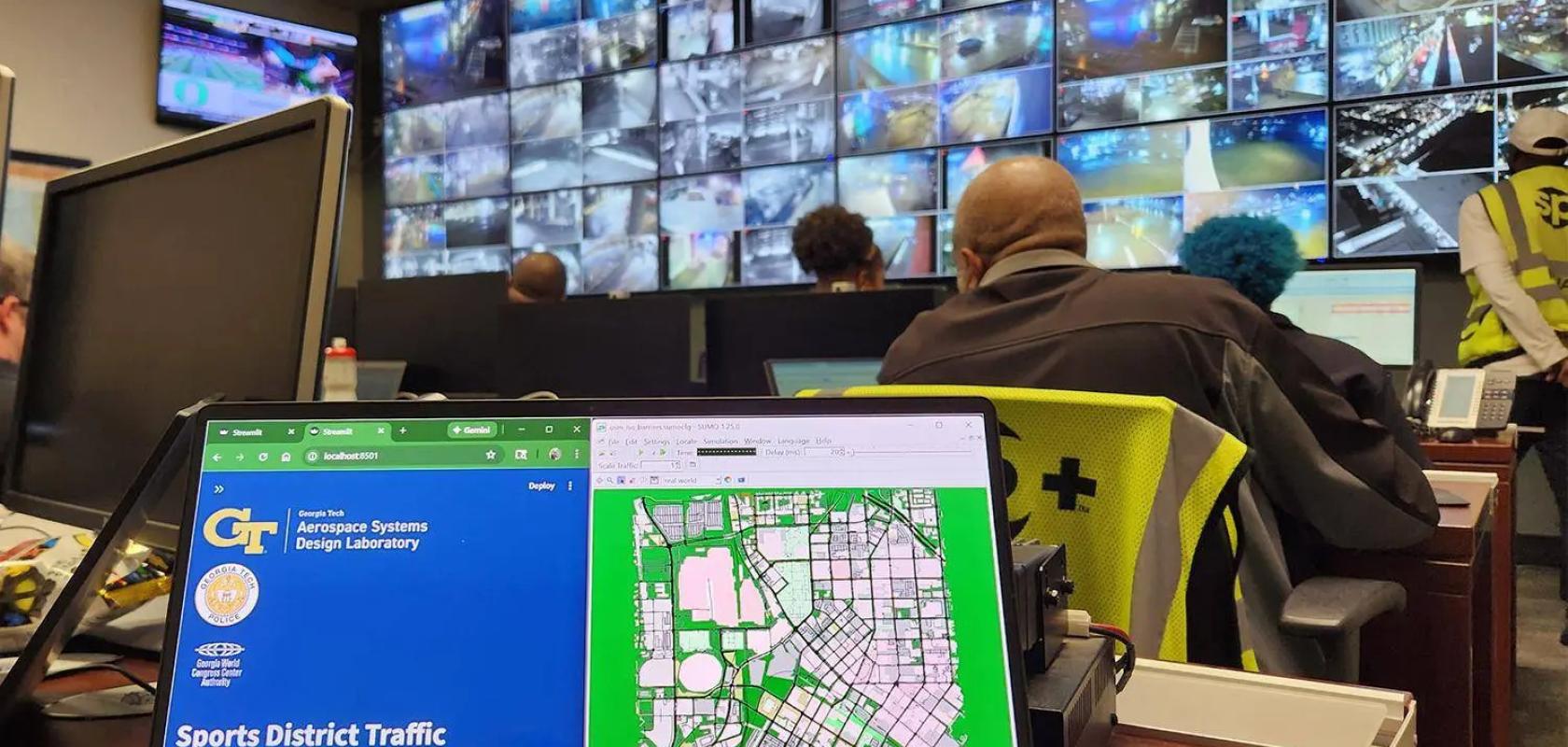
Researchers at the Georgia Institute of Technology are using digital twins and simulation technology to support traffic and crowd management during the 2026 FIFA World Cup in Atlanta, applying techniques originally developed for aerospace engineering to one of the world's largest sporting events.
The initiative is being led by the university's Aerospace Systems Design Laboratory (ASDL) in partnership with the Georgia Tech Police Department and the Georgia World Congress Center Authority. The project aims to improve pedestrian movement and traffic operations before, during and after the eight World Cup matches being hosted in Atlanta.
Atlanta is hosting its largest multi-week sporting event since the 1996 Olympic Games, placing significant pressure on transportation infrastructure and crowd management systems throughout the city's downtown entertainment district and around Mercedes-Benz Stadium.
To address these challenges, the ASDL team has developed data-calibrated simulations and digital twins that combine multiple streams of real-world data to model how vehicles and pedestrians move through the city. The models allow operators to test different interventions and predict their impact before implementing them in the real world.
"Our digital twins blend multiple streams of data to create models about how cars and people will move when they interact with each other," said Michael Balchanos, senior research engineer at ASDL and lead investigator on the project. The system enables researchers to evaluate alternative traffic management strategies in real time as conditions evolve throughout an event.
The platform includes an interactive dashboard that allows decision-makers to explore different scenarios and assess the likely impact of traffic interventions. Simulations running in the background provide rapid feedback on potential outcomes, helping authorities identify measures to reduce congestion, bottlenecks and overcrowding.
While the application focuses on World Cup operations, the technology builds on broader research efforts at Georgia Tech that use digital twins to improve urban infrastructure and transportation systems. The university has been developing digital twin capabilities that integrate live data, artificial intelligence and advanced analytics to support more informed decision-making in complex environments.
According to ASDL Director Dimitri Mavris, the project demonstrates how expertise traditionally applied to aerospace systems can be transferred to urban mobility challenges. By using simulation-driven decision support tools, researchers hope to improve both operational efficiency and public safety during large-scale events.
The collaboration is also expected to generate longer-term benefits for the university and the city. Georgia Tech Police Department officials say insights gained from modelling traffic patterns, pedestrian movement and infrastructure usage will help support future campus planning and operational decisions as the university continues to expand.
The project reflects a broader trend towards using digital twins beyond their traditional industrial applications. Originally developed to model complex engineering systems, digital twins are increasingly being used to optimise cities, transportation networks and public infrastructure by enabling planners to test "what-if" scenarios before implementing changes in the physical world.
With hundreds of thousands of visitors expected to pass through Atlanta during the tournament, researchers hope the combination of real-time data, simulation and digital twin technology will help deliver a smoother and safer experience for fans while providing a blueprint for future mega-events.